Business pushes water solutions as restrictions and municipal leaks bite
Business stakeholders have urged government to address water management shortcomings amid rising concerns over the impact of water restrictions and forecast El Niño dry and hot conditions.
But rather than just complain from the sidelines, business is also offering potential solutions to the current water infrastructure challenge, some of which appear to be gaining traction.
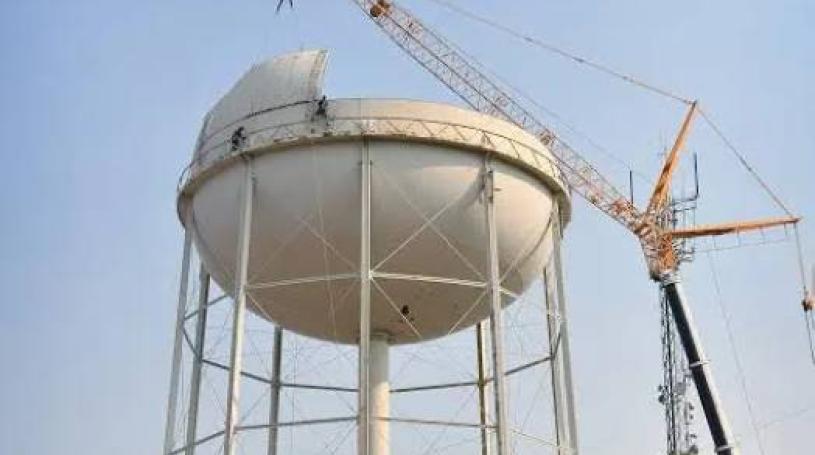
An innovative "Digital Water Tower" project is being implemented in Knysna, following a milestone agreement between Vodacom and the Knysna local municipality. It involves a cloud-based digital water tower platform that integrates sensor data from water meters and GLS Data into a single digital ecosystem, thereby enhancing service delivery.
The project, led by Vodacom-owned company Mezzanine, is touted as a model of public-private partnership in the local government domain, mirroring similar partnerships at national level, notably in logistics and infrastructure development. "What we have found is that, depending on the region, between 30 and 45% of bulk water is lost through leaks in pipes," Vodacom said this week in response to queries.
The technological innovation is also being implemented in Tshwane.
There is mounting concern about water leakage countrywide, highlighted this week when Water and Sanitation Minister Pemmy Majodina announced precautionary water restrictions for the Western Cape Water Supply System (WCWSS) following the 2026/27 Annual Operating Analysis. With combined dam storage down to 72.5%—compared with 84.4% at the same time last year and below the preferred 80% operational benchmark—and forecasts pointing to a strong El Niño with higher temperatures and increased evaporation, the department has mandated a 7% cut to domestic and industrial allocations (27.2 million cubic metres a year) and a 15% reduction in agricultural irrigation allocations (29.6 million cubic metres a year).
Majodina's briefing also laid bare severe municipal distribution losses across the province, flagging eight Western Cape municipalities exceeding the International Water Association’s 30% non-revenue water benchmark. Losses ranged from 30.7% in Overstrand, 33.8% in Bitou, 34.9% in Cederberg, 36.5% in George and 38.6% in Matzikama, to 41% in Theewaterskloof and a staggering 65.9% in Beaufort West—alongside 30%-plus losses in Stellenbosch.
Agricultural leaders warned that farmers are being asked to absorb more than double the curtailment imposed on urban users, with potential economic losses exceeding R1 billion. Agri Western Cape cautioned that the 15% irrigation cut threatens agricultural production, export earnings and rural jobs, while questioning whether below-average winter rainfall alone explains declining dam levels given ongoing concerns around the maintenance of critical water infrastructure. Agri Western Cape CEO Jannie Strydom said the organisation would engage the department and other role players "to ensure that this precious resource is properly managed."
"There is concern about the maintenance of critical infrastructure affecting current dam levels, as pointed out at various meetings with the Department of Water and Sanitation," Agri Western Cape said.
Cape Chamber President Jacques Moolman said organised business supports early, measured demand management to protect water security, while stressing that restrictions on households and businesses must be matched by urgent action on municipal pipe leaks.
"While we note the legitimate operational concerns raised by key economic sectors, most notably agriculture ahead of the summer harvest, the greatest threat to the regional economy would be a return to Day Zero anxiety that would severely disrupt business continuity and undermine investor confidence across the province," Moolman said. "At the same time, we share the concerns raised around municipal water infrastructure and high levels of non-revenue water losses. Demand-side restrictions must be matched by sustained public-sector investment in leak repairs, maintenance, and long-term bulk supply so that water wastage is curbed across the entire system."
Meanwhile, seasonal climate outlooks underscore why authorities are acting early. While the South African Weather Service notes that an El Niño signal does not translate uniformly into rainfall outcomes across every region, forecasters warn of an increased likelihood of above-normal summer temperatures, heatwaves, and elevated evaporation rates across Southern Africa—compounding two consecutive years of below-average winter rainfall in the Western Cape catchment areas. Higher temperatures not only accelerate dam drawdowns and heighten wildfire risks, but also push up peak seasonal water demand just as the province enters its dry summer months.
Business stakeholders providing alternative water storage options this week said the use of tanks and large water bladders could provide back-up for commercial enterprises likely to be impacted by more severe water restrictions. "People need to be educated. They think JoJo tanks are the only option around. But there are commercial back-up solutions, of 250 000 litres, 300 000 litres or more," said one service provider. "On the economics, it is definitely a viable option."