
CEO Chirp: Sun energy cheaper than diesel?
A famous but now outdated advertising jingle once defined South Africa as “braaivleis, rugby, sunny skies and Chevrolet”.
The car has gone, but nothing much else has changed – we're doing well in the other categories.
The point is this: some things are timeless, others are not.
The same applies to electricity and fuel – a new national obsession.
While South Africa enjoys almost limitless solar energy, the country is severely constrained in terms of current energy needs, notably electricity and supply of diesel and other fuels underpinning our import-dependent economy. Supply constraints driven by skyrocketing diesel prices highlight the urgent need to be more energy independent. And while much of the debate has centred upon ‘quick-fix’ access to pricey liquid fuels, we should take heed of that jingle and focus on our long-term strengths.
Sunny skies are indeed turning out to be more accessible than liquid fuels – and Chevrolet (in South Africa).
This accessibility isn’t just about convenience; it’s about sovereignty. While we watch the pump price of diesel surge by over R7.00 per litre this month—driven by geopolitical tremors in the Middle East—the sun over the Northern Cape remains immune to the Rand’s volatility or Suez Canal bottlenecks. Our current 'fuel crisis' is a symptom of an import-dependent addiction. Every solar panel installed in the 'sun belt' is effectively a hedge against the next global supply shock, converting our most reliable natural resource into an economic shield
Yes, we’re still thirsty for fossil fuels to power our economy, but our future investment ‘goldmine’ is not beneath our feet – it's in the sky.
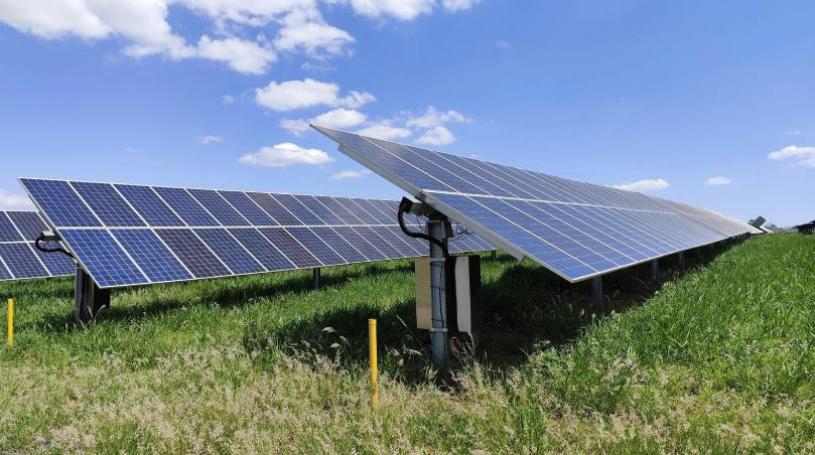
South Africa consistently ranks in the top 10% of countries globally for Global Horizontal Irradiation (GHI). Large parts of the Northern Cape receive over 2,500 kWh/m² of solar radiation annually, rivalling the best locations in the Atacama Desert (Chile) and the Middle East.
Crucially, solar is now being produced at around between 60c and 90c (LCOE per kWh), while Eskom’s coal-fire power stations are between R1,10 and R1.50. It is now widely accepted that investment in renewable energy and battery technology, and in the green economy in general, is the key to long-term energy sustainability and avoiding stifling carbon taxes.
There is also a widening gap between the cost of new solar power in the Northern Cape and the state-approved Eskom tariff. As many commentators point out, the reason we must cough up R3.00–R4.00 per kWh – about 5x the production cost in the Northern Cape – is because we are cross-subsidising the cost of maintaining our outdated power supply system.
Research clearly shows the "least-cost" path for SA involves a massive rollout of wind, solar, and storage, which is significantly cheaper than new-build coal or gas. In addition, market reform and Eskom unbundling would allow Northern Cape power to reach the market without being choked by Eskom’s internal commercial conflicts.
While there will be no reprieve from the negative impacts of the current fuel crisis, this is an opportune time to refocus our attention on what we CAN do, rather than what we can’t.
We can:
-- Implement targeted fiscal incentives for "green manufacturing"
-- Launch a "Credit Guarantee Vehicle" (CGV) for private projects
-- Operationalise a truly independent Transmission System Operator (TSO)
The more we invest in sustainable green energy, the more we protect ourselves from external shocks.
Maybe South Africa needs a jingle recharge. ENDS
John Lawson
CEO of the Cape Chamber of Commerce and Industry