
Food Price Shock Forces PSFA School Feeding Freeze
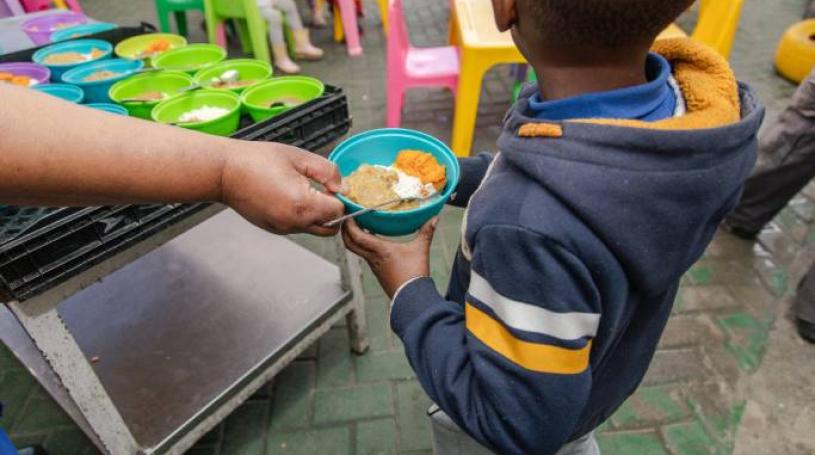
One of South Africa’s biggest school feeding organisations has had to scrap plans to feed more school children this year due to escalating food prices.
The Peninsula School Feeding Association this week confirmed a moratorium on new school beneficiaries of its service, specifically due to multiple increases in the price of staple food, including bread and maize. The prices stem from significant increases in fuel prices as a result of the Middle East conflict, where tensions persist.
“We have made the decision that we would put a moratorium on the number of learners we can feed for this year,” PSFA director Petrina Pakoe told the Cape Chamber. “We cannot adopt any additional schools that were on the waiting list."
PSFA currently purchases 3,222 bread loaves daily, to feed over 29,000 children. The multiple bread price hikes over the past two months amounted to a funding crisis, Pakoe said.
News of the moratorium adds to widespread concern about increasing food insecurity in the wake of the ongoing Middle East conflict and associated price hikes. Last month’s Household Food Basket barometer showed a 2,3% increase, including an increase in the price of essential items like maize meal and cooking oil. This month’s barometer is expected to show another increase.
More than a quarter of South African children under the age of five are stunted, a sign of chronic malnutrition, according to latest research findings. “Conservative estimates suggest that malnutrition may play a causal or contributing role in the deaths of approximately 7 000 to 8 000 children under five each year in South Africa,” Philanthropic group the DG Murray Trust said in a submission to the SA Human Rights Commission earlier this year.
Pakoe says there are indications the price increases are also having an impact on other programmes, such as food fortification and early child development. An unexpected drop in ECD enrolment in the Western Cape suggests parents are battling to afford this additional cost in a context of skyrocketing costs. “That is the knock-on effect I’m seeing, because the numbers are dropping at ECDs. We are seeing that happen. We have our usual (enrolment) dips when we are not in season, but we are in season and already we are seeing a dip. Why? I don’t think people have money to afford monthly ECD cost.”
Dr Grace Nkomo, executive director of the Connect Network, says the current food insecurity crisis demands innovative solutions, such as public-private partnerships aimed at buffering vulnerable households from the worst cost impacts. She says South Africa, unlike many other countries, at least has enough food to feed itself, “but the issue is food access”.
Private sector donors currently play a crucial role in supporting feeding schemes, but more support is urgently needed, Nkomo says. “Where are the new donors in the food space that could come and fill those gaps?”
Shoprite Checkers and the DG Murray Trust (DGMT) are collaborating on Khulisa Care, a pilot programme aimed at preventing child stunting in the Western Cape. Participating mothers receive monthly Shoprite food vouchers (valued at R525) to purchase a curated basket of 10 protein-rich, essential foods (such as eggs, tinned fish, peanut butter, and milk).
Project stakeholders believe the project could encourage more widespread private sector intervention in the food crisis.
Pakoe commended some corporates for assisting PSFA by absorbing some of the increased cost
For more information please contact the Cape Chamber's NPO Portfolio Committee. Details can be found here.