
Greatest Rivalry Series Lives On—As Liquid Fertiliser
The Greatest Rivalry Test series between the Springboks and All Blacks may be a thing of the past, but in one respect at least it lives on—as Cape Town fertiliser.
During the recent South Africa vs. New Zealand clash at Cape Town Stadium, a modular urine-to-fertiliser recovery system collected 3,600 litres of urine from spectators. Developed by South African chemical engineer Dyllon Randall, the innovative "Pee-Cycling" prototype converts human waste into nursery-grade liquid fertiliser and clean reusable water.
The stadium installation has now propelled Randall into the top four finalists for the prestigious 2026 Africa Prize for Engineering Innovation, delivered by the UK’s Royal Academy of Engineering. Selected from an initial shortlist of 16 African entrepreneurs, Randall will compete for the £50,000 top prize at the final in Johannesburg on 28 October.
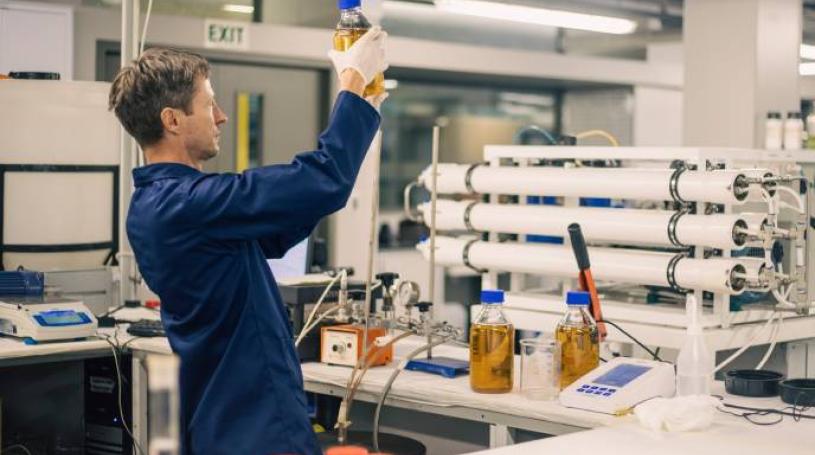
The Pee-Cycling system works by collecting urine through waterless urinals, stabilizing it to prevent nitrogen loss, and using reverse osmosis to extract nutrients without energy-intensive evaporation. A compact 12-to-15-square-metre unit can process up to 3,000 litres of urine daily, saving roughly 2,000 litres of potable water for every 1,000 litres processed.
Having moved from pilot stage to real-world operation at Cape Town Stadium in partnership with the City of Cape Town and Bidvest Prestige, the technology has already secured a three-year inclusion in the stadium’s maintenance framework and won first place at the GreenCape Afri GreenPitch Challenge 2026.
Randall said the Cape Town Stadium 3600 litre haul showed the potential harvest: "This comes from just a single bathroom, and from just one of the four urinal troughs in it. So the scope to scale up the volume that can be collected from venues is substantial,’ said Randall in a release published by the City of Cape Town.