
How many vessels on the Cape sea route? Will it benefit SA Inc?
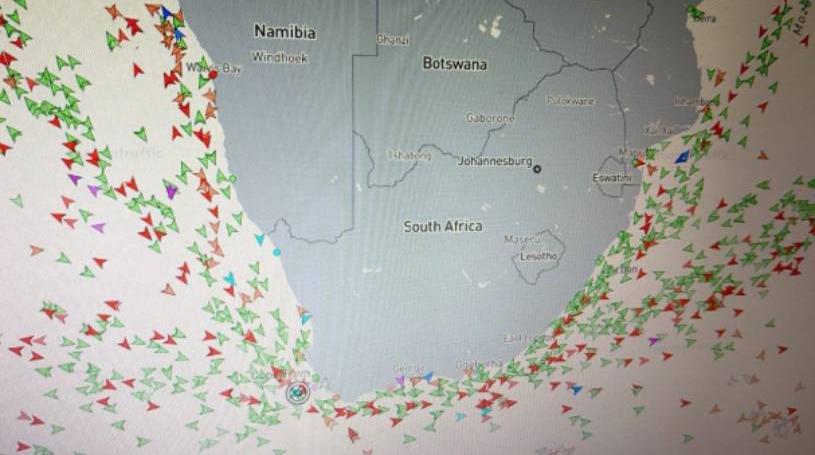
South Africa’s maritime regulator says it still isn’t clear on how many vessels are rounding the Cape to avoid the current conflict in the Middle East.
However, industry sources say the traffic is nearly double since the USA and Israel attacked Iran, with many shipping lines choosing to avoid the Red Sea /Suez Canal route due to escalating tension in that region.
The South African Maritime Safety Authority (SAMSA) has confirmed it remains on high alert to deal with any maritime emergencies related to increased traffic around the coast. But SAMSA has declined to quantify the vessel traffic flow, insisting the precise increase is difficult to pinpoint
During the prolonged closure of the Suez Canal from 1967 to 1975, global shipping was forced to divert thousands of vessels around the Cape of Good Hope, a shift that led to a documented rise in maritime incidents, including groundings, collisions, and vessel distress calls. To manage the expanded risk, the era necessitated a significant reliance on coastal search and rescue capabilities and prompted the shipping industry to rapidly adopt larger, more robust "supertankers" designed to better withstand the demanding conditions of the alternate route.
Meanwhile, Transnet National Ports Authority says it is still preparing a Ports impact report related to the Middle East disruption and marine traffic. TNPA has stressed that the increased traffic around the Cape has not translated into a significant increase in port calls.
Brian Ingpen, a veteran maritime observer, says vessel tracking systems show around 130 ships daily rounding the Cape, with the figure likely to increase should the current Strait of Hormuz blockade be lifted – releasing the current shipping bottleneck. Ingpen, considered one of South Africa’s foremost maritime commentators, has been widely quoted over the past week, including in the influential New York Times.
“The Cape route has historically functioned as an important sea lane,” Ingpen was quoted as saying.
Speaking to the Cape Chamber this week, Ingpen said the increased traffic appeared likely to continue in the foreseeable future, with the Cape route likely to grow in significance regardless of conditions in the volatile Middle East. “The Cape route under normal conditions has more ships passing than through Suez (Canal), because of the increase in the West Africa /South America/Asia trades,” Ingpen said. “Even if you take out all the diverted ships, you’ve still got some huge ships coming past – but only occasionally will one come in here.”
He said this growing traffic represented a huge opportunity for the local blue economy, particularly in ship repair and other marine services. South Africa currently lacks ship repair facilities capable of handling large vessels, which typically make use of ship repair facilities elsewhere .
Ingpen believes South Africa – and Cape Town in particular – should maximise its strategic location to expand its ship repair and marine service offering. A large drydock, which will create jobs and bolster the local economy, could be privately operated.
“With power generation, railways and oil refining,” he said, “shipping is a vital industry, but sadly is neglected within the corridors of power. Yet, with thorough, visionary planning, the sector could generate significant additional employment and contribute even more to the country’s economy.”
Ingpen’s comments echo other industry voices calling for investment into maritime infrastructure.