
How will the Middle East conflict impact the Western Cape?
Western Cape business stakeholders say the current widespread war is likely to have a series of complex, unfolding impacts. While the full trajectory of the conflict remains speculative, early indicators from the Cape Chamber’s "network of networks" suggest the regional economy must expect both operational disruptions and strategic shifts in trade and travel.
The most immediate barometer of the conflict is visible in global financial markets. Dawie Roodt, renowned economist, notes that the surge in gold prices and the strengthening of the US Dollar are clear signals of mounting uncertainty.
"Oil prices could remain relatively high or even climb to $120," Roodt warns, though he suggests a "good scenario" remains possible where the conflict is resolved quickly, allowing oil prices to stabilise.
The tourism sector faces both potential negative and positive impacts, according to Lesego Majatladi, Vice Chairperson of the Tourism and Hospitality Portfolio. He said disrupted routes may cause travellers to reconsider long-haul trips, particularly as Dubai serves as a global interchange.
"However, the Western Cape may also benefit from being viewed as a stable and safe destination," Majatladi adds. The challenge for the region will be to strengthen its global positioning as a secure alternative amidst the global travel interchange uncertainty.
For local manufacturers, this volatility is a primary concern. Anton Hanekom, Chairperson of the Cape Chamber Plastic Manufacturing Portfolio, notes that while current impacts are speculative, there are potential long-term risks to supplies and prices—both tied to Brent Crude. “Potential long-term impact is on the import of polymer raw material, and brent crude oil price impact on virgin material price.
The conflict is already altering the physical movement of goods and people. Vanessa Davidson, Vice Chairperson of the Oceans Economy Portfolio, highlights that the risk is no longer theoretical. "One marine manufacturing company has already cancelled attendance at the Korean International Boat Show due to airspace closures," she reports.
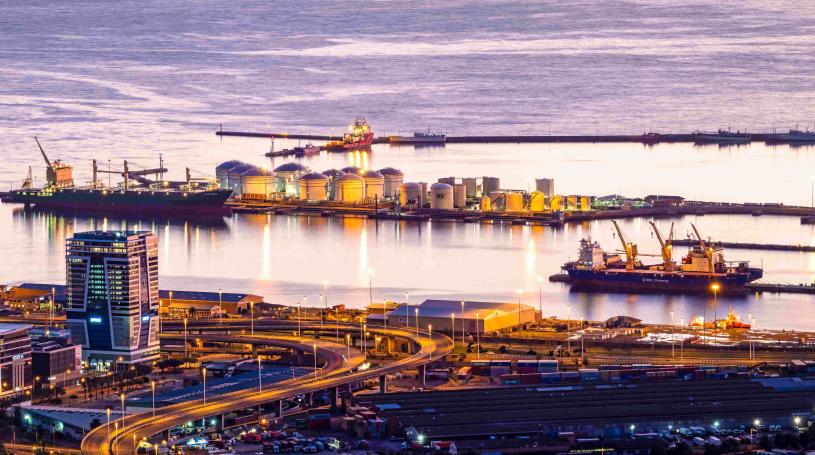
Major shipping lines, including Maersk, Hapag-Lloyd, and CMA CGM, have structurally rerouted vessels around the Cape of Good Hope to avoid the escalating conflict in the Middle East and the closure of the Strait of Hormuz, according to the latest media reports. This shift has resulted in a 112% surge in Cape diversions as of early March 2026, adding roughly 10–14 days to transit times and significantly increasing fuel and insurance costs for global trade.
Clifford Evans, Customs Liaison Manager for Cape Town Imports Seafreight, said the additional maritime traffic was unlikely to impact the Port of Cape Town: “During the Red Sea crisis, a large number of vessels came around the Cape, but there was little impact on port operations, and in fact, there was little impact on bunkering as well,” Evans said.
Bob Williamson, Cape Chamber Metal Manufacturing portfolio chairperson and ISTMA World President, urged South Africa to adopt a measured response. "We must not over-react," Williamson advises, "but focus on protecting South African markets and manufacturing capacity, using our potential to support continental Africa’s development."
This story will be updated with additional responses as received.