
Junk Status? The former Woolies Exec turning reject clothes into delight
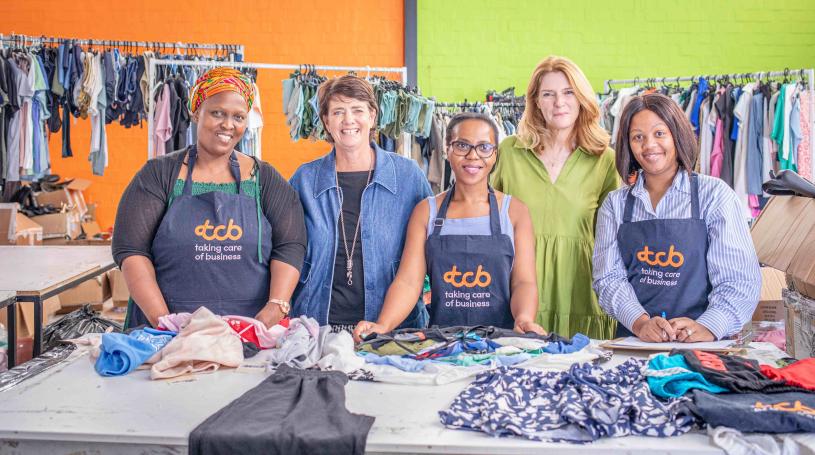
Tracey Chambers recalls two reasons why she gave up her Senior Executive job at Woolworths to set up a social enterprise using reject clothing as a tool to empower the unemployed.
The first was a gnawing sense that she needed a purpose beyond her executive salary and all it entailed. “I had the corner office, the dedicated parking bay, but it wasn’t making me happy – in a sense the classic mid-life crisis,” she says of her motivation to start ‘Taking Care of Business’ (formerly The Clothing Bank) back in 2010.
The second reason was a life lesson from her children’s nanny, ‘Beauty’, a widow who at 50 was supporting five children partly on proceeds from her side-hustle as an entrepreneur. “She came to me at that late stage in her life,” says Tracey. “Before she found me, she sold avocados on the side of the road.”
“Every so often, I would clean out my wardrobe to find clothing to give Beauty, and I was astounded by what she could extract from something I didn’t want anymore.”
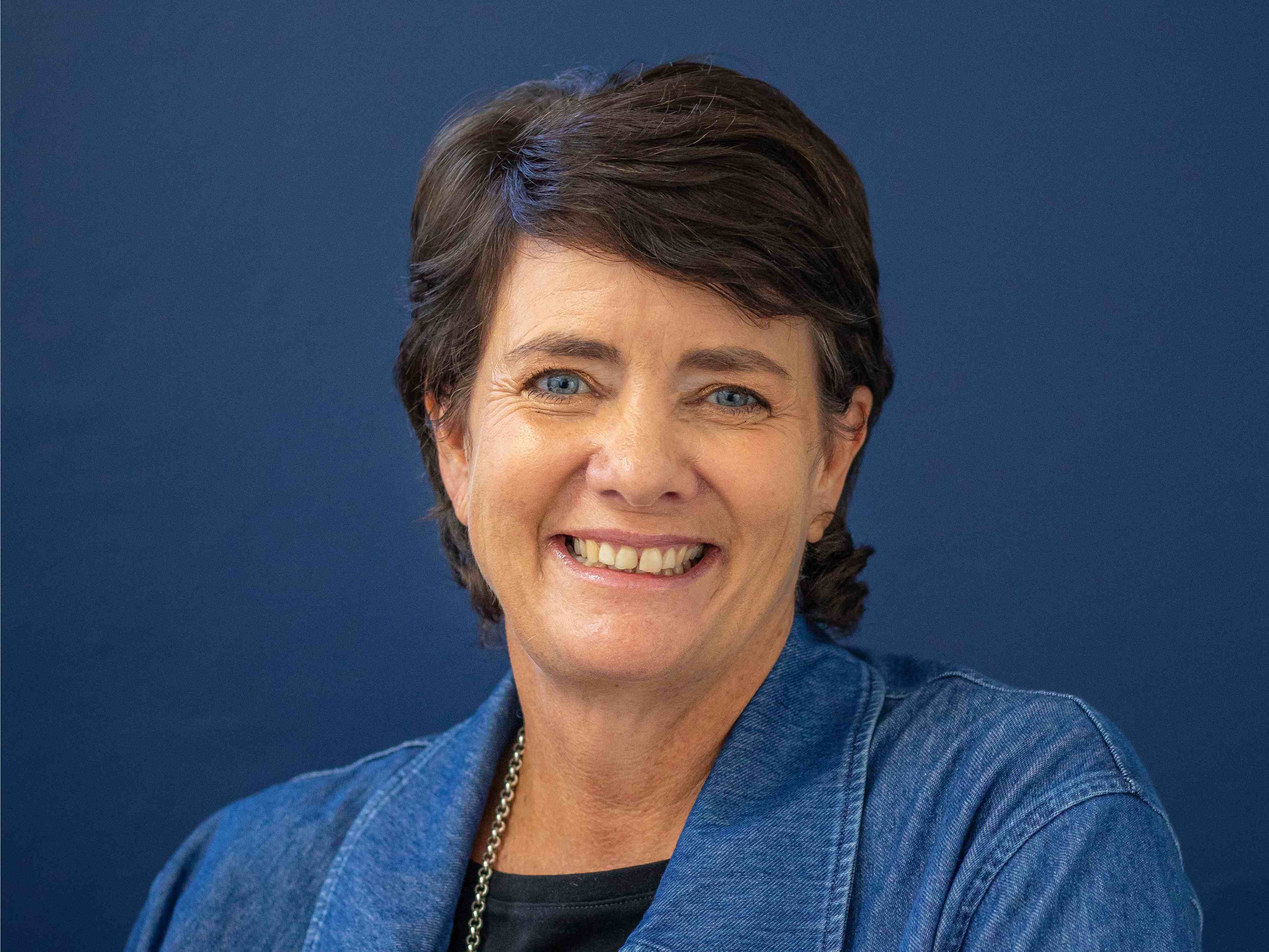
Beauty came to embody the courage and determination to overcome poverty, a common thread uniting aspiring entrepreneurs recruited to ‘Taking Care of Business’ (TCB). The 15-year-old NPO that has grown into a national organisation, and is considered one of the world’s biggest retail collaborations.
By combining her corporate knowledge with her social conscience, Tracey now oversees multiple programmes aimed at empowering South African families to escape poverty. To date, just shy of 8000 people have been recruited into enterprise development programmes, and over R500-million has been generated in small business revenue.
The success TCB, which she co-founded in 2010 with Tracey Gilmore, owes as much to the vision of its founders as to the rich vein of entrepreneurial talent they see waiting to be realised. It also owes much to willing retail partners who donate their surplus clothing, the ‘fuel’ needed to ignite TCB’s programmes. Initially sourced via Chambers’ Woolworths contacts, this clothing stream soon became a torrent, from multiple retailers, allowing the team to expand beyond their humble beginnings in the garage of an orphanage in Salt River, Cape Town.
“Somewhere between 3%-5% of retail clothing sales would be considered excess. So I went and knocked on the door of my old boss, and said: ‘I’ve got an idea: Why don't you give all of your excess product?”
She pointed out that her plan would have a triple impact: solve the Woolworths clothing waste problem; save Woolworths money (otherwise spent in reverse logistics); and provide a means to solve unemployment and eradicate poverty in families.
Woolworths agreed.
Chambers and Gilmore now had a new challenge: how to put systems in place to cope with the avalanche of clothing that came their way. Fortunately, doors soon opened as people warmed to the idea. Warehouse space was secured with help from the City of Cape Town, and the list of donors grew.
Fast forward 16 years and TCB gets about two million items donated every year, worth about R150m donated from 19 retail partners. It has branches in Cape Town, Joburg, Durban and East London supporting over 1300 entrepreneurs at any given time in their two-year programme.
The organisation now also handles other waste items, such as surplus household appliances and homeware. In their Repair Programme, damaged, broken and excess stock is donated by retail partners and the public. It is then repaired and sold to reduce e-waste.
At the heart of TCB’s story is a Theory of Change that views breaking the cycle of poverty as multidimensional, requiring a structured and measurable programme response. “We equip and support people on their journey with viable business opportunities, access to the economy, resources and capital, training, practical work experience, mentorship and coaching, and deep personal growth,” the organisation says in its mission statement.
“This model addresses both financial and psychological barriers to success, ensuring that participants can sustain their businesses and transform their lives. The result? Active, contributing citizens that become role models for others.”
Chambers believes a key to the organisation’s success is the holistic approach to skills development.
TCB adopts a ‘head, hands and heart’ approach, addressing knowledge, practical skills, and psychological aspects such as self-belief. She believes that Taking Care of Business is a win, win, win solution for corporates which often face costs and challenges in finding responsible ways to dispose of excess goods. “With this innovative model, corporates don’t just dispose of their waste, they create livelihoods for families that will break the cycle of inequality for generations to come,” she says.
“Taking Care of Business has been internationally recognised as a programme that delivers true long-term impact. We need corporates and civil society to join hands to create more shared value partnerships like this to tackle the scale of our unemployment problem in South Africa - because unemployment is everybody’s problem.”
Tracey Chambers was a panellist at the recent launch of the Cape Chamber NPO portfolio.