
My Enterprise: How Venture Workspace Redefined the Office Experience
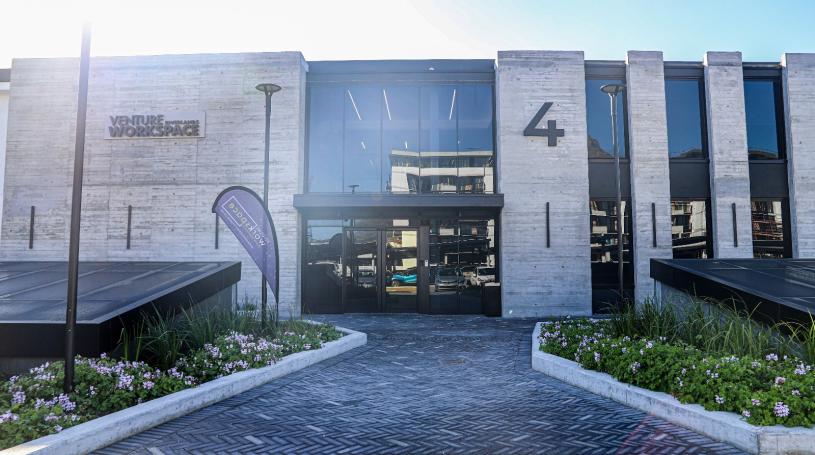
Innovative CT company recognised with Cape Tourism award
In 2016, Louis Fourie took a leap of faith that would help reshape South Africa’s working landscape. At the time, coworking was largely unfamiliar territory, still closely associated with freelance creatives and clustered almost exclusively in city centres.
But Fourie and his partners had noticed a subtle shift. The traditional office — long the altar of economic life — was beginning to lose its grip on workplace culture.
“It was a hunch,” recalls Fourie of the launch of Venture Workspace in Cape Town. “At that point, almost everything was in the city centre. We were among the first to grow out into the suburbs.”
The hunch proved correct. Within six months of opening, Venture Workspace was fully subscribed, with its first 20 offices spread across 1,000 square metres near Harfield Village and the Claremont train station.
Fast forward nearly a decade, and Venture Workspace has expanded to five locations, with four in Cape Town and one in Johannesburg. In October, the company was recognised with a Cape Tourism award for Best Coworking Business — acknowledgement not only of its growth, but of a broader shift in how people choose to work, away from rigid office models and towards more flexible, human-centred environments.
That shift is supported by strong market fundamentals. Africa’s coworking sector was valued at approximately R8.5 billion in 2023 and is growing at an annual rate of 19.5%, according to Actual Market Research. By 2030, the sector is projected to reach a value of R29.6 billion. South Africa’s coworking market alone is expected to grow by 13.8% over the next five years, with Cape Town leading the charge.
“As the gig economy expanded and the startup ecosystem matured — driven by a young, tech-savvy population — coworking spaces became essential hubs for collaboration, networking, and innovation,” the report notes.
Venture Workspace’s success has been driven by both timing and disciplined business decisions. “We probably spent six months looking for our first building,” says Fourie. “We wanted it to be in the suburbs. Traffic was a big pain for all of us, and we asked ourselves: How do we create workspaces closer to home?”
The answer came in the form of an underutilised building at the Villagers Rugby Club in Claremont, which quickly filled up. Still, the transition from employee to entrepreneur was daunting.
“It was scary working for ourselves — no month-end salary,” Fourie reflects. “One of my partners used a great analogy: it’s like speeding down a runway. You have to build momentum, and the plane has to take off — or you’re in trouble. Then the nose lifts, and suddenly you’re airborne.”
Once in flight, Venture Workspace benefited from strong tailwinds. Mobile digital technology was freeing professionals from fixed office infrastructure, while traffic congestion and unreliable public transport were making inner-city work increasingly unattractive.
Interest from property companies soon followed. “Many approached us to open spaces in their buildings because they had empty floors,” says Fourie. “But we didn’t want to compromise our ethos — suburban locations, accessibility, and a strong aesthetic.”
That discipline led to the next major opportunity: Constantia Emporium, just off the notoriously congested M3. For commuters weary of daily traffic, the space offered a compelling alternative and a practical entry point into hybrid work.
The expansion was capital-intensive. “You’re essentially handed an empty shell,” says Fourie. “Everything inside has to be built — from walls and carpets to plumbing, power and data. A lot gets spent before the first client even walks through the door.”
Then came Covid-19.
Within weeks of launching Constantia, lockdown brought operations to a near standstill. “It was terrifying,” Fourie admits. “We lost about 50% of our clientele in Claremont, and Constantia had barely opened.”
Supportive landlords helped the company weather the initial shock. When restrictions eased, Venture Workspace emerged into a world even less inclined to return to traditional offices.
“We saw what was happening in commercial property — they were haemorrhaging,” recalls Fourie. “We asked ourselves: where are these people going to work when offices reopen? And we were perfectly positioned.”
Momentum continued once the business emerged from the pandemic, with further expansion into Somerset West, Fourways in Johannesburg, and most recently, the award-winning Riverlands site in Observatory — each new location reinforcing Venture Workspace’s suburban-first strategy and its focus on accessibility, flexibility, and thoughtfully designed work environments.
Since then, the business has gone from strength to strength. Cape Town’s appeal to digital nomads and young professionals aligns seamlessly with Venture Workspace’s strategy.
“Cape Town is booming,” says Fourie. “The rest of the world is coming here.”
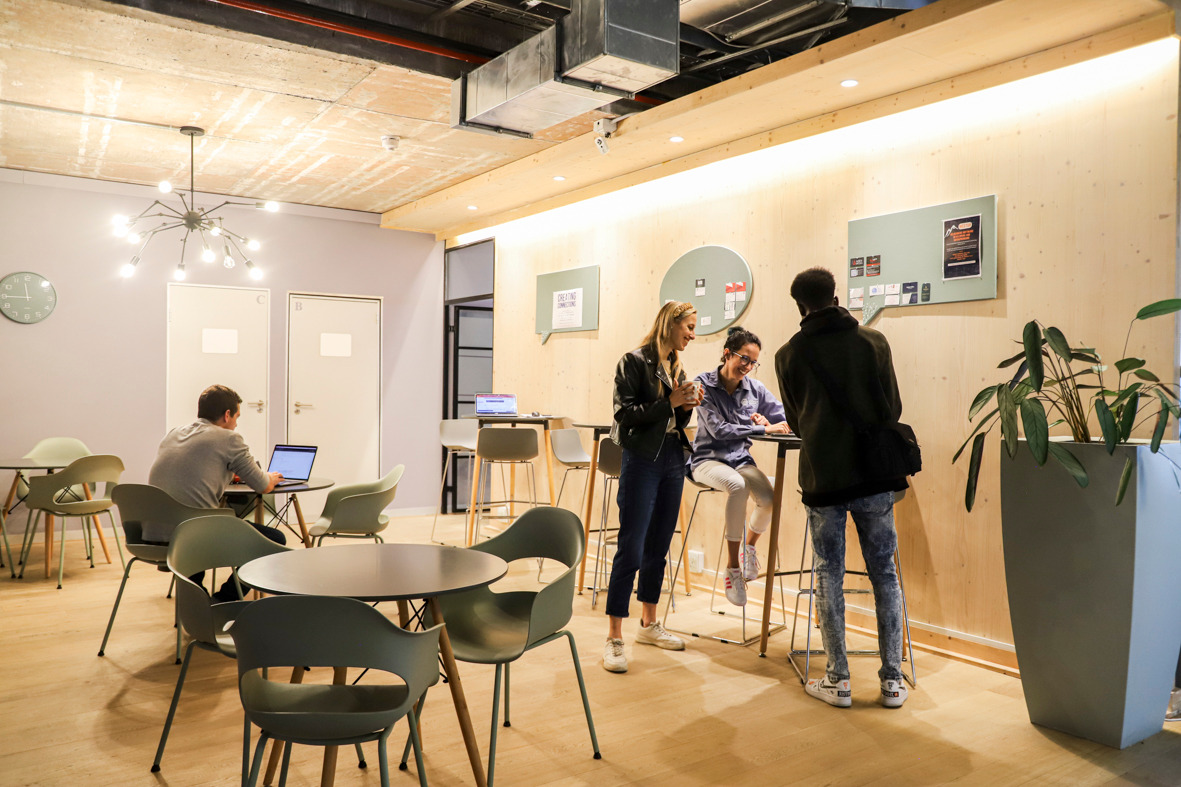
Flexibility lies at the heart of the coworking model. Tenants benefit from short-term leases and can scale their space up or down as needed — a stark contrast to the rigidity of long-term commercial leases. The model works equally well for startups, independent professionals, and large corporates adopting hybrid work systems.
There is also the value of cross-pollination. “You get people from completely different industries interacting,” says Fourie. “A lawyer meets a graphic designer, who meets a marriage counsellor. That mix creates real energy.”
Additional benefits include informal networking events, tenant discounts with neighbouring businesses, and integration into shopping centres. Venture Workspace also offers virtual offices for mobile professionals — from consultants to tradespeople — who need a business address without a permanent desk.
The company’s Riverlands site now spans two floors, with 66 offices, 322 desks, four meeting rooms and two canteen areas.
The numbers tell a clear story: professionals want flexible, well-supported work environments aligned with modern technology — and with a broader shift in how people view work itself.
“It’s the ease of it,” Fourie concludes. “Everything is ready. There’s no capital outlay, no maintenance. We have a receptionist managing your diary, meeting rooms are handled for you — and there’s even coffee waiting when you walk in.”