
Q&A: DEE MOSKOFF. ‘Homework ‘safe spaces’ helping children in Philippi East.’
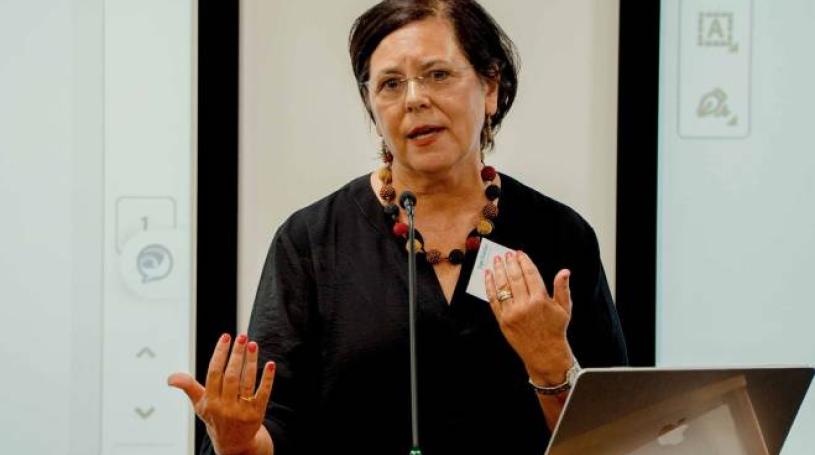
DEE MOSKOFF explains how the Cape about how the Cape Chamber NPO–Business Collaboration is putting child safety at the centre of precinct-led development
Moskoff is chairperson of the Cape Chamber’s new NPO Portfolio Committee
Philippi East is one of Cape Town’s most densely populated urban settlements. What do we know about the area’s child population?
We know that the high-density child population is under pressure
Based on age-band data from the Statistics South Africa Census 2011, Philippi East is estimated to have approximately 15,000 to 16,000 children under the age of 18. This represents roughly one-third of the area’s total population[1].
With the settlement covering just under 9 square kilometres, this translates to an estimated child population density of approximately 1,700 to 1,900 children per km²—and in some interpretations, approaching 2,000 children per km² in the most densely populated zones.
These figures highlight an exceptionally high concentration of children living within a constrained geographic space, placing sustained pressure on schools, health services, public infrastructure, and community safety systems.
How big a factor is crime exposure as an environmental factor in childhood development?
In high-density communities such as Philippi East, child safety is shaped not only by direct incidents of violence but also by the constant presence of crime-related stressors in daily life. Gang activity, visible policing operations, and community-level fear often form part of the broader environment in which children grow up.
While not all children are directly exposed to violence, research and field experience from community practitioners suggest that sustained exposure to instability can contribute to chronic anxiety, reduced concentration in educational settings, and limited mobility. In many households, children’s outdoor play and independent movement are restricted as a protective measure, further reducing access to safe developmental spaces.
These pressures compound existing structural challenges in areas already experiencing extremely high child density, reinforcing the need for coordinated safety and social interventions.
How is the Cape Chamber’s ‘whole society’ collaboration model impacting the community?
Within this context, the Cape Chamber of Commerce and Industry is advancing a firm-led precinct strategy that brings together businesses, civil society, and public sector stakeholders to support safer, more resilient urban environments.
According to the Chamber’s precinct economy approach, the intention is to align business leadership with local governance structures and community organisations to improve safety, economic activity, and service delivery at neighbourhood level.
This model is increasingly being explored in high-need urban areas such as Philippi East, where fragmented service delivery and safety challenges require coordinated, multi-stakeholder responses rather than isolated interventions.
How are NPOs responding to this challenge? What role are they playing as community safety partner?
A key non-profit partner in this evolving ecosystem is Beautiful Gate, based in the Lower Cross area of Philippi East.
Originally established in 2003 as a hospice for children dying of AIDS, the organisation adapted its services as treatment access improved and child survival rates increased. Over time, it transitioned into broader child protection, family strengthening, and community-based social work.
In partnership with the Department of Health, Beautiful Gate helped establish Philippi East’s first paediatric HIV clinic and has since expanded into education support programmes, including after-school homework clubs that provide safe, structured environments for children.
Recognising the link between environmental safety and child wellbeing, the organisation has increasingly positioned itself as a local anchor institution capable of contributing to broader area safety and development planning.
Beautiful Gate is also part of Connect Network, a coalition of NGOs and faith-based organisations operating across approximately 15 communities in Cape Town. The network focuses on strengthening ‘child-safe communities’ through coordinated local interventions, shared learning, and community-based protection systems.
This collaborative model is increasingly seen as complementary to precinct-led development strategies, particularly where child safety is a central concern in spatial planning, crime prevention, and social infrastructure investment.
How important is child safety from an economic and precinct stability point of view?
Within the Cape Chamber’s evolving precinct framework, child safety is emerging not only as a social priority but also as a foundational component of economic stability and neighbourhood resilience.
High child population density combined with elevated exposure to crime-related stressors places long-term pressure on educational outcomes, workforce readiness, and social cohesion. In this context, interventions that create safe spaces for children—whether through schools, after-school programmes, or community hubs—are increasingly viewed as integral to broader precinct performance.
The integration of nonprofit expertise, such as that of Beautiful Gate, with business-led precinct governance offers a potential pathway toward more coordinated, place-based responses in areas like Philippi East.
Final thoughts in summary?
The emerging collaboration between NPOs, business, and civic structures reflects a broader shift in thinking: that child safety in high-density urban settlements cannot be addressed by any single sector alone.
Instead, it requires a shared responsibility model—one that recognises children as central stakeholders in urban safety, and precinct development as a mechanism not only for economic growth, but for safeguarding childhood itself. ENDS