
Q&A with Prof Karin-Therese Howell: AI Systems Are Increasingly Shaping Decisions in Society. Are We Ready?
“What is important to understand is that AI specialists don't emerge in isolation. They are built on a foundation of mathematics, statistics and computational thinking. If we want more AI capability, we need to strengthen that entire pipeline.”
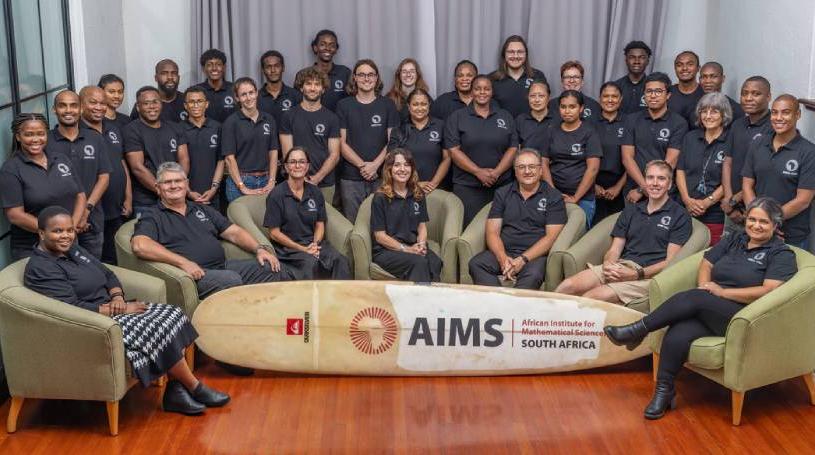
Editor’s Note: This interview follows the recent recognition of AIMS South Africa as a category winner at the 2026 Western Cape Economy Innovation Awards held at Cape Town City Hall.
CAPE CHAMBER: How bad is the skills shortage with respect to maths, data science and AI? Is there any way of quantifying it?
KARIN-THERESE HOWELL: The challenge is less about a shortage in the traditional sense and more about the extraordinary growth in demand for advanced quantitative skills. Every sector of the economy is becoming more data-driven and computationally intensive. What is important to understand is that AI specialists don't emerge in isolation. They are built on a foundation of mathematics, statistics and computational thinking. If we want more AI capability, we need to strengthen that entire pipeline.
CAPE CHAMBER: What does this mean in effect? Is it stunting our internal capacity, or do we have to rely on foreign expertise to plug the gaps?
KARIN-THERESE HOWELL: A shortage of advanced mathematical and computational skills limits our ability to build local solutions, conduct frontier research, grow high-tech industries, and respond to African challenges using African expertise. When these skills are scarce, institutions and companies either compete for a small pool of local talent or rely on expertise from elsewhere. That is not sustainable if we want long-term scientific and economic independence.
CAPE CHAMBER: AIMS is plugging that gap, or closing the gap. But would you say more is needed in terms of graduates and programmes? Are you winning the race, or do other gaps open up, such as the need to keep up with advances in AI?
KARIN-THERESE HOWELL: We are proud of our contribution: 1,157 graduates, 44 countries represented, and more than 62 alumni who have become lecturers at South African universities. That means AIMS is not only producing individual graduates; it is strengthening the teaching and research pipeline. But the goalposts keep moving. AI is advancing rapidly, and the need is not just for more graduates, but for graduates who can keep learning, adapt, and work across disciplines.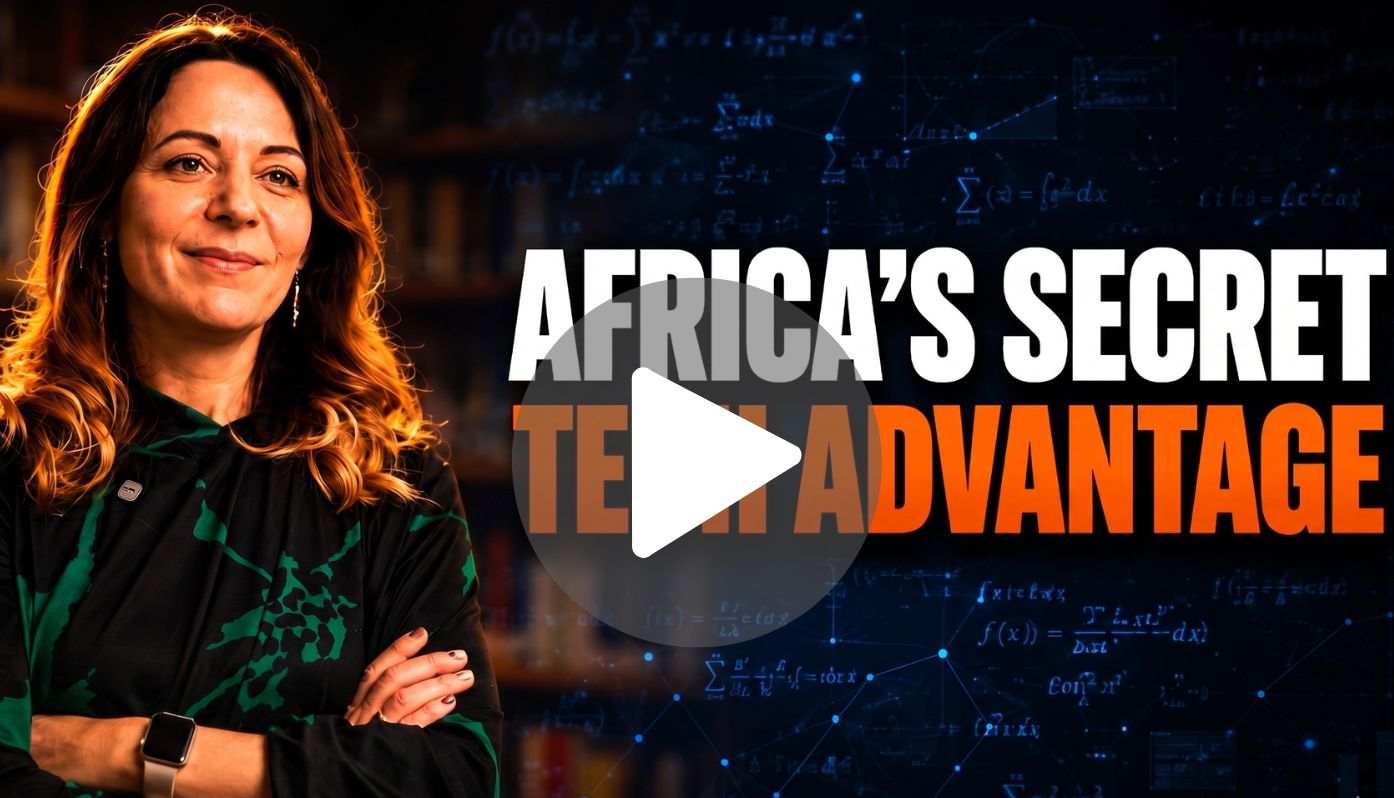
CAPE CHAMBER: You speak of an Africa-led model. What makes it uniquely African?
KARIN-THERESE HOWELL: The Africa-led nature of AIMS begins with its origins. Professor Neil Turok is widely celebrated for founding AIMS in Cape Town in 2003. What began as a bold vision to nurture Africa's scientific talent has since grown into Africa's leading network for postgraduate training and research in the mathematical sciences.
It is Africa-led because it is designed around African talent, African institutions, and African priorities. The model brings exceptional students from across the continent into a high-level scientific environment, connects them with global expertise, and prepares them to contribute back to African universities, research institutions, industry, and public life. Importantly, it is not simply a model imported from elsewhere. It was conceived and first established in the Western Cape, at AIMS South Africa, and has since been successfully replicated across the continent. Today, it demonstrates how African institutions can build world-class centres of excellence that attract global partners while remaining firmly rooted in African needs and aspirations.
CAPE CHAMBER: The collaboration aspect: When you say there is no permanent faculty, do you mean there are no fulltime teaching staff? Can you clarify? Are teachers contracted to work with your graduates, or do they attend classes at various tertiary Institutions?
KARIN-THERESE HOWELL: AIMS South Africa has core academic and administrative staff, but it does not operate like a conventional university department with a large permanent teaching faculty delivering the entire curriculum. Instead, AIMS brings in leading lecturers from universities and research institutions around the world to teach intensive courses. Students are based at AIMS, in Muizenberg, and their degrees are awarded through our partner universities: UWC, UCT and Stellenbosch University. This creates a distinctive collaborative model.
CAPE CHAMBER: How different are your courses from those offered at the aforementioned tertiary institutions? Is part of your innovation the specific programme design? Do you cherry pick aspects from across the spectrum of available courses?
KARIN-THERES HOWELL: The innovation is partly in the programme design. AIMS courses are intensive, problem-driven and highly interactive. Rather than following a traditional semester-long lecture format, students engage deeply with mathematical sciences, data science, AI, modelling and computation through concentrated blocks. The programme draws on strengths from across the mathematical sciences, but it is not simply a collection of existing university courses. It is designed to build flexible, advanced problem-solvers.
CAPE CHAMBER: You also spoke of the cross pollination and perspective that comes from having a diverse cohort of students and teachers. Do students collaborate on projects and in that way benefit from this diversity? Can you say a bit more about this aspect?
KARIN-THERESE HOWELL: The diversity of the cohort is one of AIMS’ great strengths. Students come from many countries, educational systems and scientific backgrounds. They learn from one another, work together, and bring different perspectives to problem-solving. This matters because the challenges we face — climate, health, energy, AI, education, finance — are not narrow problems. They require collaboration across borders, disciplines and cultures.
CAPE CHAMBER: The world is obsessed by AI. You've spoken about the importance of addressing the gender imbalance in the aforementioned fields, particularly in the context of AI. Can you expand on that a bit?
KARIN-THERESE HOWELL: AI systems are increasingly shaping decisions in society. If women are underrepresented in AI and data science, then we risk building technologies that reflect only a narrow set of experiences and priorities. At AIMS South Africa, 35% of all graduates are women. In the 2025–2026 cohort, women represent 42% of students overall and 63% in the Mathematical Sciences stream. That is encouraging, but the broader field still has work to do.
CAPE CHAMBER: People associate AI with job losses, but you see this digital revolution requiring new skilled professionals to shape the future. Are we looking at a whole new area of data science and /or mathematical endeavor? Do you see opportunity here, or just another gap to plug?
KARIN-THERESE HOWELL: AI will change work, and some jobs will be disrupted. But it also creates a major opportunity: the opportunity to train people who can understand, build, adapt and govern these technologies. For Africa, the question is not whether AI will happen. It is whether African scientists, mathematicians and innovators will help shape it. We need people who can use AI responsibly in areas such as health, climate, education, agriculture, finance and scientific discovery.
CAPE CHAMBER: How does AI fit into existing branches of mathematical science?
KARIN-THERESE HOWELL: AI is not separate from mathematics. It is built on mathematics: linear algebra, probability, statistics, optimisation, algorithms, dynamical systems and computation. The stronger the mathematical foundation, the better equipped we are to use AI critically and creatively.